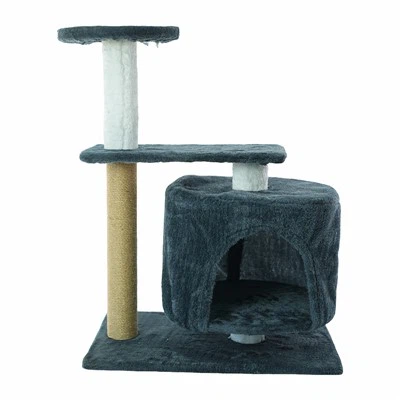
Hey there, fellow cat lovers! As a cat scratching board supplier, I've been in the thick of the feline furniture - scratching battle for quite some time. You've probably come across the age - old question: Can a cat scratching board prevent furniture scratching? Well, let's dig into this topic and find out.
First off, we need to understand why cats scratch in the first place. Scratching is a natural behavior for cats. It's not just about being naughty or ruining your nice sofa. When cats scratch, they're actually doing several important things. For starters, it helps them shed the outer layer of their claws, keeping them sharp and healthy. It's like a built - in nail care routine for our furry friends.
Secondly, scratching is a form of exercise. It allows cats to stretch their bodies, particularly their shoulders, back, and legs. You know how good a good stretch feels after sitting at a desk all day? Well, cats feel the same way when they get to scratch on something.
And last but not least, scratching is a way for cats to mark their territory. They have scent glands in their paws, and when they scratch, they leave behind their unique scent. This is their way of saying, "This is my space."
Now, back to the main question. Can a cat scratching board prevent furniture scratching? The short answer is: it can, but it's not a guaranteed fix - all.
Let's talk about the factors that can make a cat scratching board effective in diverting your cat's attention from your furniture.
1. Material Matters
The material of the scratching board plays a huge role. Cats have preferences, just like we do. Most cats love sisal rope or sisal fabric. Sisal is a tough, natural fiber that provides the right amount of resistance for cats to dig their claws into. It's similar to the texture of tree bark in the wild, which is a natural scratching surface for cats.


We offer Woven Sisal Cat Scratching Posts that are made from high - quality sisal. The woven design gives cats multiple angles to scratch, which is really appealing to them. It's like a little adventure for their paws.
Some cats also like cardboard scratching boards. Cardboard is soft and gives a different kind of scratching experience. It's great for cats who prefer a softer surface. Our Round Cat Scratch Toy is made of durable cardboard and has a round shape, which is not only fun for cats to scratch but also easy for them to bat around like a toy.
2. Location, Location, Location
Where you place the scratching board is crucial. You need to put it in a place where your cat spends a lot of time. If your cat loves to lounge in the living room, put the scratching board there. If they like to hang out in your bedroom, place one in there too.
Cats are creatures of habit, and if the scratching board is easily accessible and in a familiar area, they're more likely to use it. You can also place it near the furniture that your cat has been targeting. This makes it easier for them to switch from the furniture to the scratching board.
3. Size and Shape
The size and shape of the scratching board matter as well. Some cats like vertical scratching surfaces, while others prefer horizontal ones. If your cat likes to stretch up high when they scratch, a tall scratching post like our Extra Tall Cat Scratcher might be the way to go. It allows them to fully extend their bodies and get a good stretch.
On the other hand, if your cat likes to lie down and scratch, a horizontal or angled scratching board would be more suitable. You can even get creative and offer a variety of shapes and sizes to keep your cat interested.
4. Encouragement and Training
Just putting a scratching board in your home isn't enough. You need to encourage your cat to use it. You can do this by sprinkling some catnip on the scratching board. Catnip is like a magical herb for cats. It can make them go crazy with excitement and is a great way to attract them to the scratching board.
You can also show your cat how to use the scratching board. Gently take their paw and move it back and forth on the board. This might seem silly, but it can really help them understand what the board is for.
However, there are some situations where a scratching board might not completely stop furniture scratching.
1. Territorial Marking
If your cat is scratching your furniture to mark their territory, they might still do it even if you have a scratching board. In this case, you might need to use other methods, such as pheromone diffusers. These diffusers release calming scents that can reduce your cat's need to mark their territory aggressively.
2. Boredom
If your cat is bored, they might turn to your furniture for entertainment. In addition to a scratching board, you should provide your cat with plenty of toys and playtime. Interactive toys like feather wands or laser pointers can keep your cat engaged and less likely to scratch your furniture out of boredom.
3. Multiple Cats
If you have multiple cats in your household, things can get a bit more complicated. Cats might scratch furniture to establish dominance over each other. In this case, you need to make sure there are enough scratching boards for each cat. You might also need to observe their behavior and separate them if necessary.
In conclusion, a cat scratching board can be a powerful tool in preventing furniture scratching, but it's not a one - size - fits - all solution. By choosing the right material, location, size, and shape, and by providing proper encouragement and training, you can increase the chances of your cat using the scratching board instead of your furniture.
If you're struggling with furniture scratching and think a good cat scratching board might be the answer, we're here to help. We offer a wide range of high - quality cat scratching boards that are designed to meet your cat's needs. Whether you're looking for a sisal scratching post, a cardboard scratch toy, or an extra - tall scratcher, we've got you covered.
If you're interested in purchasing our products or have any questions, please don't hesitate to reach out for a procurement discussion. We're always happy to talk about how our cat scratching boards can make your life with your cat a whole lot easier.
References
- Overall, Karen. "The Cat Behavior Answer Book." Howell Book House, 2000.
- Turner, Dennis C., and Patrick Bateson. "The Domestic Cat: The Biology of Its Behaviour." Cambridge University Press, 2000.