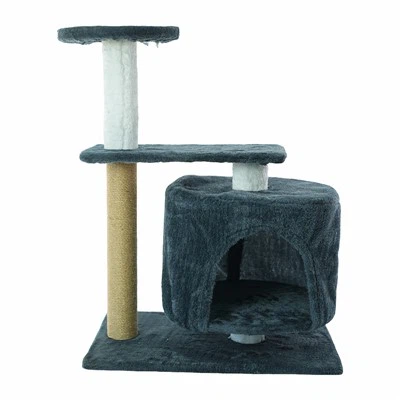
Hey there, fellow cat lovers! As a cat scratching board supplier, I've seen firsthand how these simple yet essential items can have a huge impact on our feline friends' behavior. In this blog, I'm gonna break down the effects of a cat scratching board on a cat's behavior, and trust me, it's pretty fascinating stuff.
1. Natural Instinct Fulfillment
Cats are born with a strong urge to scratch. It's not just a random behavior; it's deeply rooted in their instincts. Scratching helps them shed the outer layer of their claws, keeping them sharp and healthy. When a cat uses a scratching board, it's like a built - in manicure station.
Think about it. In the wild, cats scratch on trees to mark their territory. They leave both a visual mark (the scratch on the surface) and a scent mark from the glands in their paws. When we provide a scratching board at home, we're giving them a safe and appropriate way to do what comes naturally. It's like a little piece of the wild right in your living room.


Take my own cat, Whiskers, for example. Before I got him a scratching board, he would scratch on my new sofa. It was driving me crazy! But once I introduced a Carpet Cat Scratch Board, he was all over it. He'd stretch out, dig his claws in, and give that board a good scratch. And you know what? He stopped going after the sofa. It was like he finally found his own little territory within the house.
2. Stress Relief
Cats can get stressed out just like we do. Changes in the environment, new people or pets in the house, or even a visit to the vet can make them feel anxious. Scratching is a great way for them to relieve that stress.
When a cat scratches, it releases endorphins, which are like the body's natural feel - good chemicals. It's their way of self - soothing. A scratching board provides a dedicated space for them to do this. It's like their personal stress - buster.
I've had customers tell me that after getting a Diy Scratch Board For Cat, they noticed a significant change in their cat's behavior. One customer's cat, Mittens, was really skittish around new people. But with the DIY scratching board, Mittens would go over and scratch whenever there were guests. It seemed to calm her down, and she was much more relaxed overall.
3. Exercise and Stretching
Scratching is also a form of exercise for cats. When they stretch up to scratch, they're working out their muscles, especially in their shoulders, back, and legs. It helps keep them limber and in good shape.
A good scratching board encourages cats to engage in this full - body stretch. It's like a mini - workout session for them. And let's face it, most indoor cats don't get as much exercise as they should. A scratching board can be a great way to get them moving.
I remember one customer who had an overweight cat named Tubby. They got a Cat Scratching Board For Wall and noticed that Tubby started using it more and more. Over time, he lost a little weight because he was getting that extra exercise from scratching. It was a win - win situation.
4. Marking and Communication
As I mentioned earlier, scratching is a way for cats to mark their territory. But it's also a form of communication. Other cats can pick up on the scent left behind by the scratching, and it can tell them a lot about the cat who did the scratching.
In a multi - cat household, a scratching board can be a great way for cats to establish their boundaries. It reduces the chances of territorial fights. Each cat can have their own scratching session and leave their mark, and it's like they're saying, "This is my space, but we can all coexist."
I've seen this in action with a customer who had three cats. They were constantly fighting over territory. But after getting a few scratching boards and placing them in different areas of the house, the cats seemed to relax. They'd scratch on their respective boards, and the fighting almost stopped completely.
5. Behavioral Problems Prevention
Not having a proper scratching outlet can lead to a whole host of behavioral problems. Cats might start scratching on furniture, curtains, or even walls. They could become more aggressive or withdrawn.
By providing a scratching board, we're preventing these issues from happening in the first place. It gives them an outlet for their natural behaviors, so they don't have to find other, less desirable ways to scratch.
I've had so many customers come to me with stories of how a scratching board saved their furniture. One lady, Mrs. Johnson, was on the verge of getting rid of her cat because it was scratching up everything in sight. But after I recommended a Carpet Cat Scratch Board, her cat changed its ways. Now they're living happily ever after, and her furniture is intact.
Why Choose Our Scratching Boards?
As a cat scratching board supplier, I take pride in the products we offer. Our boards are made from high - quality materials that are durable and attractive to cats. We have a variety of styles and designs to suit every cat's preference and every home's decor.
Whether you're looking for a carpeted board, a DIY option, or a wall - mounted board, we've got you covered. Our products are designed with the cat's needs in mind, so you can be sure that your furry friend will love them.
If you're interested in purchasing our cat scratching boards, we'd love to have a chat with you. We can discuss your cat's specific needs and help you choose the perfect board. Just reach out to us, and we'll be more than happy to assist you in providing the best for your beloved cat.
References
- Bradshaw, J. W. S. (2016). Cat Sense: How the New Feline Science Can Make You a Better Friend to Your Pet. Basic Books.
- Turner, D. C., & Bateson, P. (Eds.). (2000). The Domestic Cat: The Biology of Its Behaviour. Cambridge University Press.