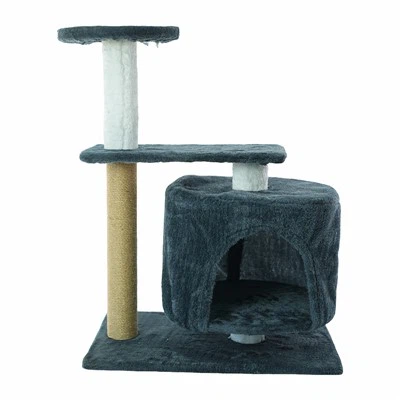
When it comes to providing a comfortable and stimulating environment for our feline friends, a scratching post is an essential item. Not only does it satisfy their natural instinct to scratch, but it also helps keep their claws healthy and provides them with exercise. As a scratching post supplier, I often receive questions from cat owners about the best height for a kitten's scratching post. In this blog post, I will delve into this topic, exploring the factors to consider and providing some guidelines to help you choose the right height for your kitten's scratching post.
Understanding a Kitten's Scratching Behavior
Before we discuss the ideal height for a kitten's scratching post, it's important to understand why kittens scratch. Scratching is a natural behavior for cats, serving several purposes. Firstly, it helps them shed the outer layer of their claws, keeping them sharp and healthy. Secondly, scratching is a form of exercise, allowing cats to stretch their muscles and maintain flexibility. Additionally, scratching is a way for cats to mark their territory, leaving both a visual and olfactory mark through the scent glands in their paws.
Kittens start scratching at a very young age, usually around 3 to 4 weeks old. At this stage, they are exploring their environment and learning how to use their claws. Providing them with a suitable scratching post early on can help redirect their scratching behavior away from your furniture and other household items.
Factors to Consider When Choosing the Height of a Scratching Post
Several factors should be taken into account when determining the best height for a kitten's scratching post. These include the kitten's age, size, and activity level, as well as the type of scratching post and the available space in your home.
Kitten's Age and Size
A kitten's age and size play a significant role in determining the appropriate height of a scratching post. Younger kittens may not be able to reach very high, so a shorter scratching post may be more suitable for them. As they grow older and more agile, they will be able to reach higher and may benefit from a taller scratching post.
As a general rule of thumb, the scratching post should be tall enough for the kitten to fully stretch out when scratching. This allows them to exercise their muscles and keep their claws healthy. A good starting point is to choose a scratching post that is at least twice the height of the kitten when it is standing on its hind legs.
Activity Level
The activity level of your kitten is another important factor to consider. Some kittens are more active and energetic than others, and they may require a taller scratching post to satisfy their need for exercise and play. If your kitten is particularly active, you may want to choose a scratching post that is at least 3 feet tall.
On the other hand, if your kitten is more laid-back and less active, a shorter scratching post may be sufficient. A scratching post that is around 2 feet tall may be suitable for a less active kitten.
Type of Scratching Post
There are several types of scratching posts available on the market, each with its own unique features and benefits. The type of scratching post you choose can also affect the ideal height.
- Upholstered Cat Scratching Post: Upholstered scratching posts are covered in a soft, plush material that is comfortable for kittens to scratch. These scratching posts are often shorter in height, typically around 2 to 3 feet tall. They are a good option for kittens who prefer a softer surface to scratch on. Upholstered Cat Scratching Post
- Jute Cat Scratching Post: Jute scratching posts are covered in a rough, fibrous material that is similar to the texture of tree bark. These scratching posts are more durable and can withstand more intense scratching. They are usually taller than upholstered scratching posts, typically around 3 to 4 feet tall. Jute scratching posts are a good option for kittens who are more aggressive scratchers. Jute Cat Scratching Post
- Hanging Scratching Post: Hanging scratching posts are suspended from the ceiling or a wall, allowing kittens to scratch at different angles. These scratching posts are often adjustable in height, making them a versatile option for kittens of all ages and sizes. Hanging scratching posts are a good option for kittens who like to play and climb. Hanging Scratching Post
Available Space
The available space in your home is also an important consideration when choosing the height of a scratching post. If you have limited space, you may need to choose a shorter scratching post that can fit in a corner or against a wall. On the other hand, if you have a large room or a dedicated cat area, you may be able to choose a taller scratching post that can provide more exercise and entertainment for your kitten.
Recommended Heights for Kitten Scratching Posts
Based on the factors discussed above, here are some recommended heights for kitten scratching posts:
- Young Kittens (3 - 6 months): For young kittens, a scratching post that is around 18 to 24 inches tall is usually sufficient. This allows them to reach the top of the scratching post and fully stretch out when scratching.
- Older Kittens (6 - 12 months): As kittens grow older and more agile, they will be able to reach higher and may benefit from a taller scratching post. A scratching post that is around 24 to 36 inches tall is a good option for older kittens.
- Adult Kittens (12+ months): Once kittens reach adulthood, they will have fully developed their scratching behavior and may require a taller scratching post to satisfy their needs. A scratching post that is around 36 to 48 inches tall is a good option for adult kittens.
It's important to note that these are just general guidelines, and the best height for your kitten's scratching post may vary depending on their individual needs and preferences. It's a good idea to observe your kitten's scratching behavior and adjust the height of the scratching post accordingly.
Other Considerations When Choosing a Scratching Post
In addition to the height, there are several other factors to consider when choosing a scratching post for your kitten. These include the material, stability, and location of the scratching post.
Material
The material of the scratching post is an important consideration, as it can affect your kitten's scratching behavior and the durability of the scratching post. As mentioned earlier, jute and upholstered materials are popular choices for scratching posts. Jute is a rough, fibrous material that is similar to the texture of tree bark, making it a good option for kittens who like to scratch. Upholstered materials are softer and more comfortable, making them a good option for kittens who prefer a softer surface to scratch on.
Stability
The stability of the scratching post is also important, as it can prevent it from tipping over and causing injury to your kitten. Look for a scratching post that is heavy and has a wide base to ensure that it is stable. You may also want to consider attaching the scratching post to the wall or floor to provide additional stability.


Location
The location of the scratching post is another important consideration, as it can affect your kitten's use of the scratching post. Place the scratching post in a location where your kitten spends a lot of time, such as near their bed or in a sunny spot. You may also want to place multiple scratching posts in different locations around your home to provide your kitten with more options.
Conclusion
Choosing the right height for a kitten's scratching post is an important decision that can affect your kitten's health and well-being. By considering the kitten's age, size, activity level, the type of scratching post, and the available space in your home, you can choose a scratching post that is suitable for your kitten's needs. Remember to observe your kitten's scratching behavior and adjust the height of the scratching post accordingly.
As a scratching post supplier, we offer a wide range of scratching posts in different heights, materials, and styles to meet the needs of every kitten and cat owner. If you have any questions or need help choosing the right scratching post for your kitten, please don't hesitate to contact us. We would be happy to assist you in finding the perfect scratching post for your furry friend.
References
- Overall, K. L. (2013). Clinical Behavioral Medicine for Small Animals. Elsevier Health Sciences.
- Houpt, K. A. (2007). Domestic Animal Behavior for Veterinarians and Animal Scientists. Wiley-Blackwell.
- Landsberg, G., Hunthausen, W., & Ackerman, L. (2011). Handbook of Behavior Problems of the Dog and Cat. Elsevier Health Sciences.